
Materials Intelligence

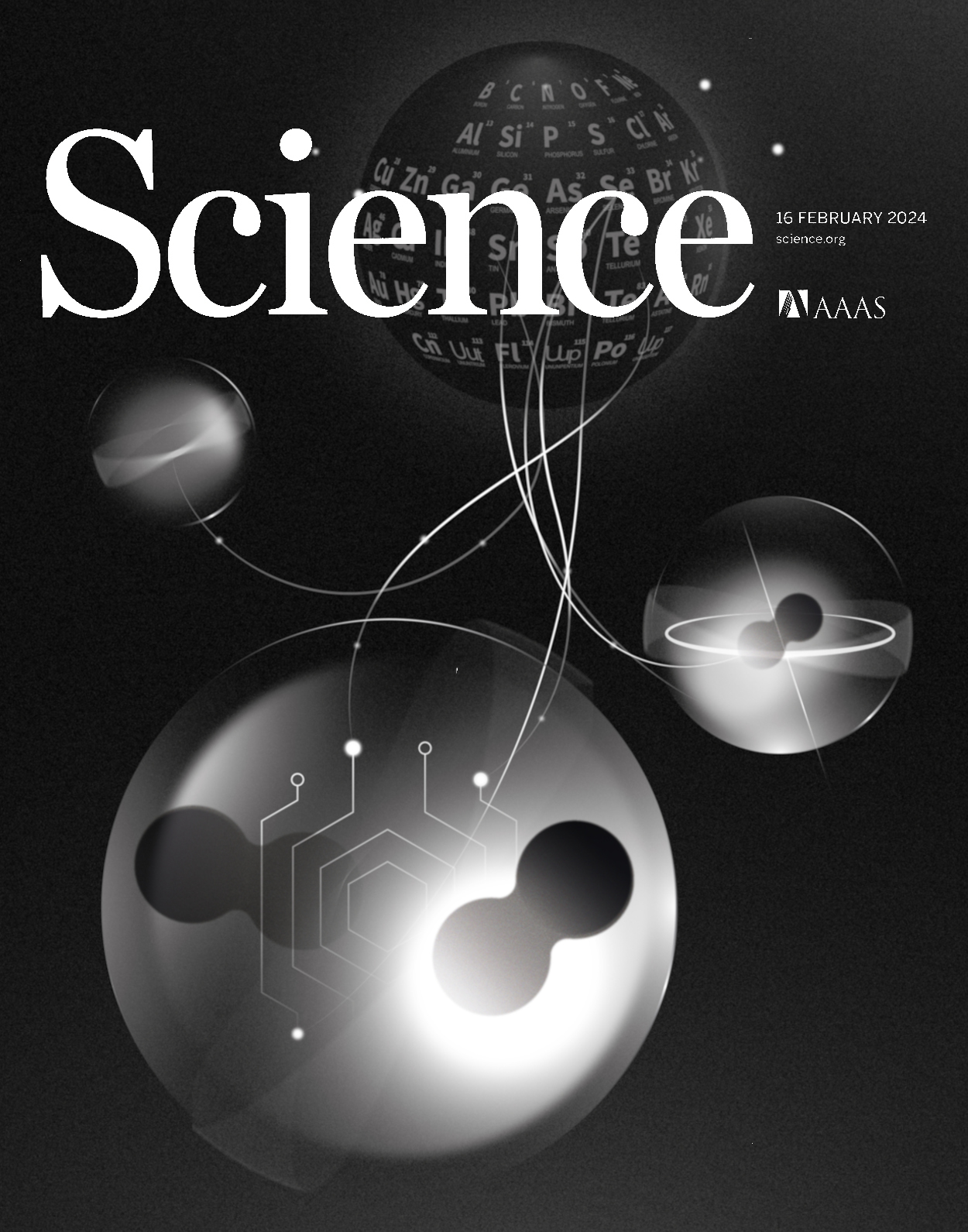
First-principles simulation and machine learning for materials discovery

...


Hi, I'm Andrij Vasylenko.

I develop machine-learning methods and computational workflows that help scientists explore complex systems and make better decisions — faster. My work connects physics-based simulation, generative models, and experimental data into closed-loop pipelines for materials discovery. My work is supported by national HPC allocations and international collaborative grants, with partners in the UK, Switzerland, and the US.
...
...

Physics-Informed Modelling

First-principles simulation remains the ground truth for materials properties — but it is expensive. I develop machine-learning models trained on quantum-mechanical data to reach DFT-level accuracy at a fraction of the compute cost, and use physics-based constraints to improve the interpretability and out-of-distribution reliability of generative models. This combination of simulation and ML underpins the closed-loop discovery workflows that have produced experimentally validated results across thermodynamic stability, electronic structure, and transport phenomena.

Selected Publications:
A. Pshyk, A. Vasylenko et. al, Communications Materials 7 (2026)
G. Han, A. Vasylenko et. al, JACS 143, 18216 (2021)
A. Vasylenko et. al, ACS Nano 12, 6023 (2018)
A. Vasylenko et. al, Phys. Rev B 95, 121408(R) (2017)

Open Scientific Software

I contribute to open-source scientific software used well beyond materials research. This includes algorithmic contributions to PyOD — a Python library for anomaly and outlier detection with over 16 million downloads — and research pipelines for experimental data capture, ML workflow orchestration, and reproducible HPC-scale computation. See projects.
I also maintain the Materials Innovation Factory group repository
(50+ projects).